
Production Stimulation
Hydraulic Fracturing Design

Customer Challenge

Vulcania Energy received a request to evaluate the hydraulic fracturation potential of a newly drilled well that intersected an overpressured pre-salt tight sandstone reservoir offshore Republic of Congo. The client was intrigued by the success of a legacy well, which experienced a remarkable 7x post-frac production enhancement, as well as the recent achievements in a neighboring field, where production was achieved through a combination of horizontal wells and multifrac completions. The client sought to explore the possibility of implementing a similar Field Development Plan (FDP) for their asset.

Solution

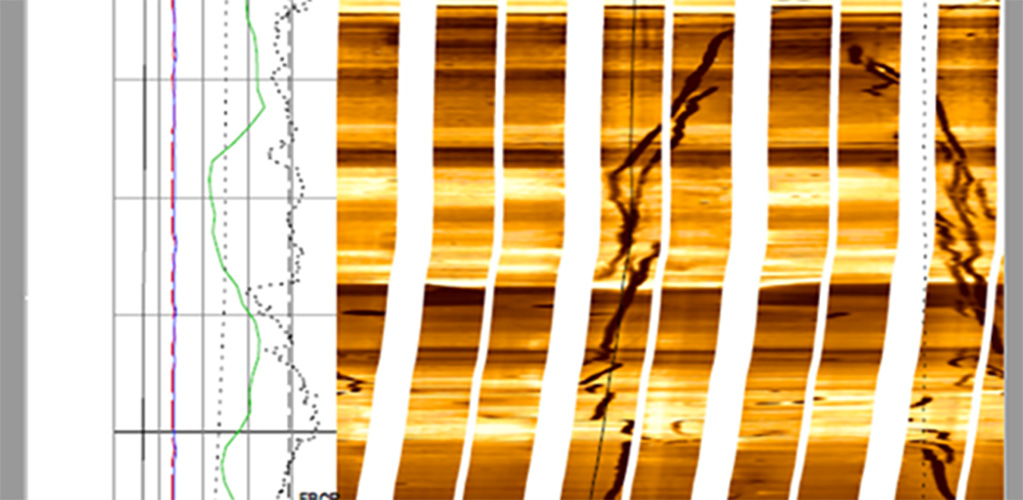
An in-depth root-cause analysis of the legacy well’s success was conducted, revealing that the effective hydraulic fracture half-length achieved was only 20 meters, despite a treatment designed for 140 meters. Image log analysis indicated drilling-induced fractures in the overlaying cap rock, initially believed to act as a fracture barrier. It was discovered that the perforations had been shot at the top of the reservoir, with the assumption that the cap rock experienced higher stresses than the sandstone. Consequently, the fracture likely migrated upward into the shale, rather than propagating deep into the sandstone reservoir.

Outcome & Value Delivery

Drawing strong analogies between the client’s asset and the neighboring field, which achieved success with multi-stage fracking, it was suggested that each horizontal well could potentially produce over 3 million barrels of oil equivalent (MMstb+) over a 5-year period. A larger FDP, comprising 10 wells, could yield up to 40 MMstb over a 10-year period. To progress from the conceptual level to a credible field development strategy, Vulcania Energy recommended the client to:

1.Stimulate future appraisal wells by shooting the perforations away from the overlaying shale to avoid undesired fracture migration.

2.Employ a commercially available software to model the fracturing process.

3.Design the fracturing operation using a radial propagation model, specifically the penny-shape model, instead of the more traditional KGD or PKN models. This approach could help enhance the effectiveness and efficiency of the fracturing process and optimize production from the tight sandstone reservoir.

Want to get in touch with us for more details and other
real-world cases?

Just fill in your contact details here below and we will answer you right back!